
Ceramic Coating vs. Paint Sealant: What's Right for Your Car?
Ceramic coatings and paint sealants both protect your paint — but they're very different products. Here's what each does, how long they last, and which one suits your car and budget.
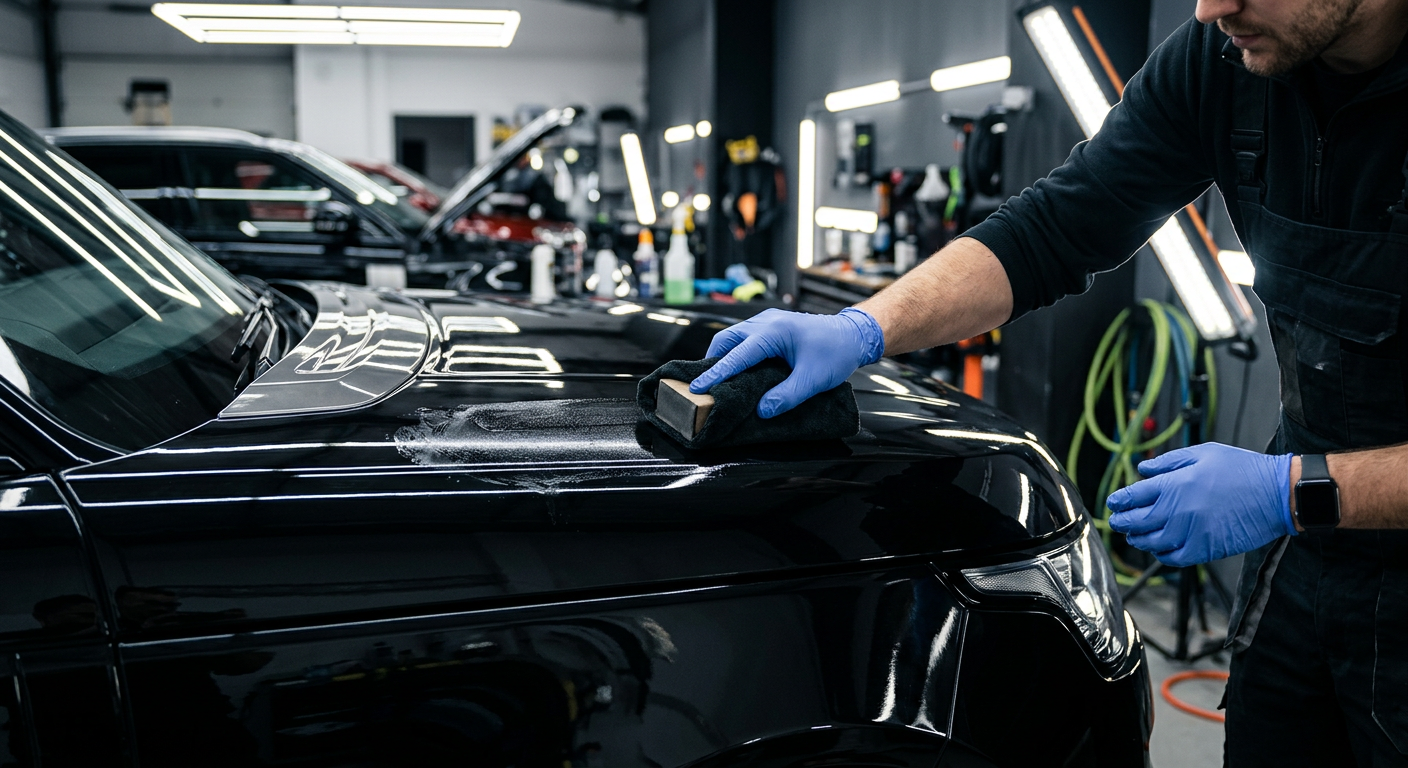
Not All Paint Protection Is Equal
Walk into any car accessories shop and you’ll find dozens of products claiming to protect your paint. Spray waxes, paste waxes, paint sealants, ceramic coatings — they all promise shine and protection, but they work in fundamentally different ways and deliver dramatically different results.
Here’s a clear breakdown.
Paint Sealants: Good Protection, Predictable Maintenance
A paint sealant is a synthetic polymer product that bonds to the top layer of your clear coat and forms a sacrificial protective layer. Applied correctly, it adds gloss and makes the surface hydrophobic — water beads and rolls off, taking light contamination with it.
Lifespan: 6–12 months with good maintenance washing.
Application: Can be applied by hand or machine polisher.
Best for: Cars that are washed regularly and don’t stay outdoors year-round.
The downside of sealants is that they deplete — UV, washing, environmental fallout, and general use wear them down. Annual reapplication is typical.
Ceramic Coatings: Semi-Permanent Protection
A ceramic coating (sometimes called a nano-ceramic or 9H coating) is a liquid polymer that cures to form a hard, semi-permanent bond with your paint. Once cured, it becomes part of the surface rather than sitting on top of it.
The result is a coating that is significantly harder than the paint it protects, deeply hydrophobic, UV resistant, and far more resistant to chemical etching from bird droppings, insect splatter, and industrial fallout.
Lifespan: 2–7 years depending on the product, application quality, and maintenance.
Application: Requires paint decontamination and usually paint correction first. Professional application is strongly recommended.
Best for: Cars you plan to keep for 3+ years, vehicles parked outdoors, or any car where paint quality matters to the owner.
The Key Differences
| Sealant | Ceramic Coating | |
|---|---|---|
| Hardness | Soft, sacrificial | 9H hard, semi-permanent |
| Lifespan | 6–12 months | 2–7 years |
| UV resistance | Moderate | High |
| Hydrophobicity | Good | Excellent |
| Prep required | Clean paint | Full decontamination + correction |
| Cost | Low | Moderate–high |
| DIY-friendly | Yes | Not recommended |
Paint Protection Film: A Third Option
PPF (Paint Protection Film) is a different category altogether — a physical film applied to paint surfaces that physically blocks stone chips, scratches, and road debris. It doesn’t improve gloss the way coatings do, but it prevents physical damage that neither sealants nor ceramic coatings can stop.
Many owners combine PPF on high-impact zones (bonnet leading edge, front bumper, guards) with a ceramic coating over the rest of the car for comprehensive protection.
Which Should You Choose?
If you want easy, low-cost, annual maintenance protection: a quality paint sealant applied after a proper decontamination wash is the right choice.
If you want 3+ years of protection and don’t want to think about it: a professional ceramic coating is the investment that makes sense. The upfront cost is higher, but the long-term cost per year is usually lower, and the result is significantly better.
If you own a prestige or enthusiast vehicle: combining PPF on the front end with a ceramic coating gives you the most complete protection available.
What We Offer at Exotic Protection
We offer all three protection types for vehicles across Greater Sydney:
- Paint sealant — included in our full detail service
- Ceramic coating — from single-layer base packages to multi-layer premium installs
- Paint Protection Film — partial coverage (bonnet, bumpers, guards) or full car wraps
All coating and PPF services include paint decontamination and correction preparation. Call 0450 420 065 to discuss the right package for your car.